
Schools2030 Country
Suspendisse potenti. In vitae bibendum enim. Suspendisse iaculis ultrices.
Morbi est lectus, viverra id lectus ut, tincidunt commodo lorem. Quisque vulputate lectus id sagittis euismod. Aenean egestas lacus eu scelerisque laoreet. In hac habitasse platea dictumst. In ultrices.
Sed et sem dui. Nam sed leo tempus, venenatis libero eget, varius nisl. Maecenas dictum eleifend ligula, scelerisque varius erat eleifend at. Fusce condimentum feugiat nisi et ultrices. Cras sollicitudin consectetur leo a dignissim. Aenean sollicitudin tristique magna, ut pharetra massa tristique a. Fusce eu auctor odio.
Aliquam erat volutpat. Donec sollicitudin lorem in risus mollis tempus. Pellentesque eget arcu et risus maximus viverra sit amet vitae neque. Morbi rutrum est ex, quis egestas ante gravida eget. Maecenas suscipit facilisis tristique. Mauris fermentum porttitor finibus. Etiam eget eros et dui finibus congue. Nullam fermentum, nisl et suscipit feugiat, risus orci varius nibh, id aliquet tortor velit vitae enim.
Maecenas condimentum posuere dui quis scelerisque. Vivamus augue nisl, condimentum nec tortor eu, porttitor porta diam. Mauris condimentum convallis ultricies. Quisque sit amet est porta, tincidunt arcu nec, venenatis ante. Sed quis augue enim. Curabitur ex ipsum, mollis ac nulla in, pulvinar gravida dolor. In hac habitasse platea dictumst. Nulla quis urna sem. Nam lacinia, lacus eu pellentesque eleifend, nunc ipsum congue enim, id auctor arcu mauris pharetra leo.
Our Team in COUNTRY

Halima Shaaban
Schools2030 National Coordinator

Zenab Said
Programme Manager – Coast Region

Muhsin Abubakar
Programme Officer

Anna Hadida
Project and Communication Officer

Rupert Corbishley
Regional Education Advisor, AKF East Africa

Emily Tusiime
Regional Assessment Coordinator, AKF East Africa
The Kenyan Education Landscape
Kenya is rich in both culture and geography, with a plethora of ethnic groups and languages within its borders and terrain that varies from tropical coastlines and rainforests to savannah and mountain ranges. Of a total population of 55 million, 39% of Kenyans (21.5 million) are under 15 years old; 1.13 million of these children are out of school.
Show More
Kenya’s education system is considered amongst the strongest on the continent, and the Government of Kenya has in recent years allocated significant budget to implement education reforms. These reforms include the introduction of the Competency Based Curriculum and measures to improve transition rates from primary to secondary school. Kenya’s education system does face some significant challenges, including large class sizes, high drop-out rates in secondary school and low learning outcomes in poorer communities. The Early Childhood Development sector has struggled with insufficient public spending and uneven service delivery.
In 2020, school closures interrupted learning for over 17 million children, who missed more than six months of formal education. During this time, there was an increased risk of violence, child labour and of deleterious mental well-being. Alongside a government keen on expanding holistic learning and teaching methods, Schools2030’s school-driven approach provides opportunity for Kenya’s education system to innovate with local insight in response to these challenges.
The Kenyan Education Context
Kenya is rich in both culture and geography, with a plethora of ethnic groups and languages within its borders and terrain that varies from tropical coastlines and rainforests to savannah and mountain ranges. Of a total population of 55 million, 39% of Kenyans (21.5 million) are under 15 years old; 1.13 million of these children are out of school.
Kenya’s education system is considered amongst the strongest on the continent, and the Government of Kenya has in recent years allocated significant budget to implement education reforms. These reforms include the introduction of the Competency Based Curriculum and measures to improve transition rates from primary to secondary school. Kenya’s education system does face some significant challenges, including large class sizes, high drop-out rates in secondary school and low learning outcomes in poorer communities. The Early Childhood Development sector has struggled with insufficient public spending and uneven service delivery.
In 2020, school closures interrupted learning for over 17 million children, who missed more than six months of formal education. During this time, there was an increased risk of violence, child labour and of deleterious mental well-being. Alongside a government keen on expanding holistic learning and teaching methods, Schools2030’s school-driven approach provides opportunity for Kenya’s education system to innovate with local insight in response to these challenges.
THE THREE-STEP MODEL IN KENYA
ASSESS
In February 2021, Schools2030 Kenya worked alongside national education stakeholders from the Ministry of Education, the Kenya Institute of Curriculum Development, the Early Childhood Network, and the Kenya National Examination Council to select five learning domains to prioritise for pre-school, primary school and secondary school students.
With support from Oxford MeasurEd, Schools20320 teams and teachers have co-designed learning outcome assessment tools for each of these domains, and these are used to collect data on students’ holistic learning levels at the beginning of each design cycle and throughout the implementation process to measure the efficacy of the innovation.
These tools were developed for primary and secondary level with help from teachers across ten schools, and were then reviewed and refined by a further 30 schools. At pre-primary level, Schools2030 Kenya worked alongside Save the Children’s to adapt their International Development and Early Learning Assessment (IDELA) tool to measure learning outcomes and with ECD Measure to adapt the Brief Early Childhood Quality Inventory (BEQI) tool to measure learning environment quality.
For more information about how this process works across the programme, see our Assess page.
PRIORITY LEARNING DOMAINS
KENYA
PRE-SCHOOL
- Literacy
- Numeracy
- Health & Nutrition
- Communication
- Problem Solving
PRIMARY SCHOOL
- Literacy
- Numeracy
- Health & Nutrition
- Science
- Leadership
SECONDARY SCHOOL
- Literacy
- Numeracy
- Digital Literacy
- Taking Responsibility
- Reconciling Tensions
Access examples of assessment tools
from across our programme countries.
All these tools are available free to download below and will continue to be refined and iterated to ensure robust psychometric validity.
It was just an idea half-baked – And then we joined Schools2030 and we were taught how to ideate, how to define, how to FIND OUT whether your idea is achievable – is it feasible, is it sustainable?
Lonah Joy, Youth Champion, Kenya
INNOVATE
The team in Kenya has been working closely with schools to develop innovations that reflect needs as determined by the learning domain selection and assessment data. Since the programme began, over 360 teachers have taken part in HCD workshops using a contextualised version of the Schools2030 Toolkit adapted for the Kenyan context. Find out more about this crucial step of the Three-Step model on our Innovate page. There are currently 11 promising innovations being implemented and tested in schools, and three more currently being incubated across a variety of schools and learning sites.
Amani ‘peace’ clubs
Sylvester Kalama and Evans Nyaberi, Kizingitini Secondary School, Lamu
- Reconciling Tensions
- Collaboration
- Empathy
Target Age Group(s):
- Secondary school
Learn More
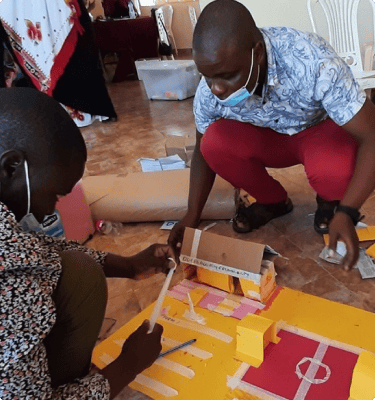
The peace clubs are after-school co-curricular groups where learners engage in various activities to enhance their collaboration and team spirit. This includes participating in football matches and other sports (where the teams are formed of students from different villages obliging them to work together), peace walks and other community service exercises.
The Place Value Kit
Amina Mohammed Mbule, Ronald Ngala Primary School and Miswalehe Hamisi Chigarimbwe, Vyemani Primary School
- Numeracy
- Problem-solving
Target Age Group(s):
- Pre-school
- Primary school
Learn More
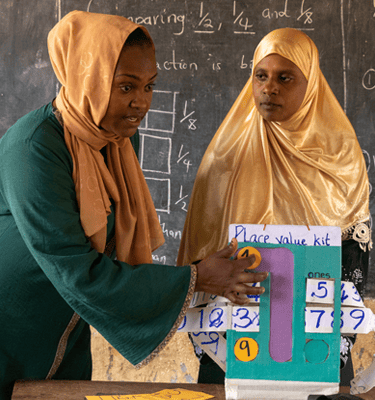
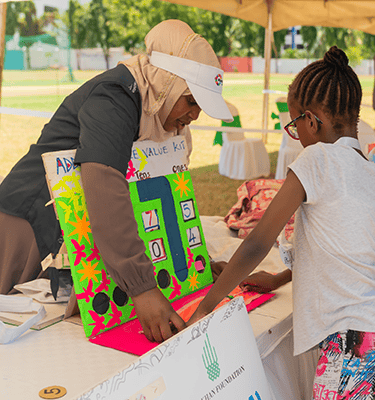
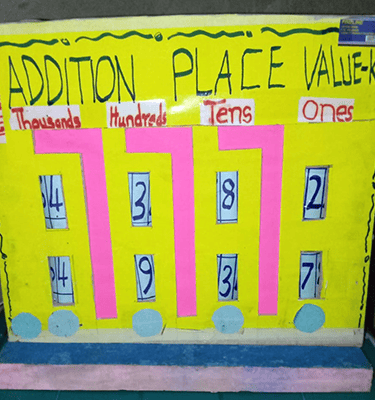
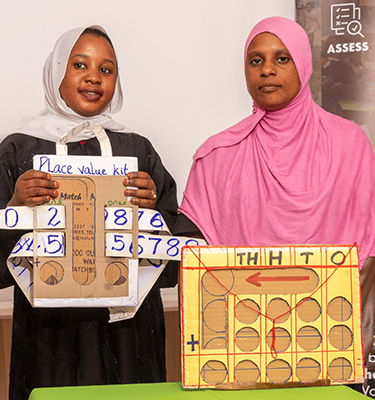
The Place Value Kit addresses the challenge of knowing place values of numbers with two digits or more. The model has columns that allow learners to move digits from one column to the next demonstrating how place and value intersect in any given number. Students are able to physically interact with the model which supports improved understanding of abstract concepts. The innovation is currently being incubated in 60 classrooms across Mombasa and Lamu County with teachers adapting it to suit different grade levels, usually by the addition of place values.
Grade 3 New Words TV and Tree Words Library
Kizingitini Boys Primary School, Lamu
Target Domains:
- Literacy
- Collaboration
- Problem-solving
Target Age Group(s)
- Primary school
Learn More
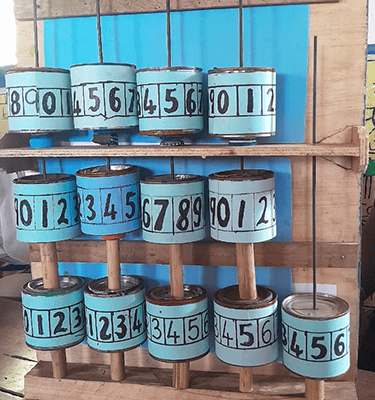
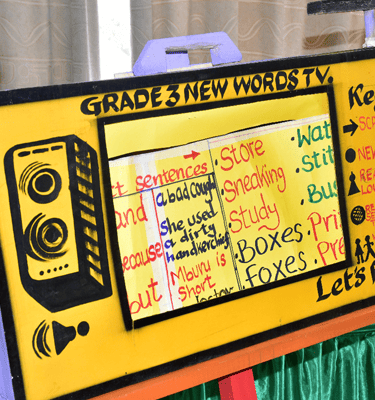
This innovation was developed to address literacy because learners lacked self-efficacy and confidence in reading. The new word TV contains words and sentences that are written progressively and a learner can scroll through as they read. The material is interactive and engaging so as the learner manipulates it, their confidence slowly builds and they are better able to converse with new words. The learner also gets an opportunity to lead his/her peers in in the activity and this builds his/her confidence in interacting with other people.
Ustadi Club Platform
Target Domains:
- Digital skills
- Leadership
- Collaboration
- STEM
- Arts and culture
Target Age Group(s):
- Out of school youth
Learn More
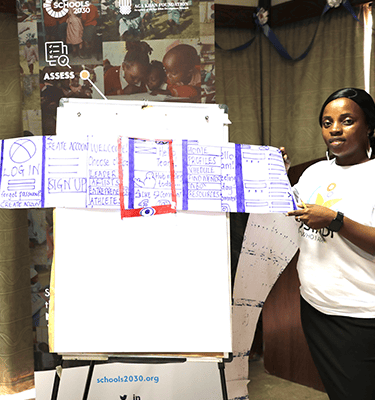
The platform is an app that links youth with local mentors, who support them in various ways to grow their talents and passions, and find a meaningful career.
Download our HCD Tools for Kenya to start creating education innovations in your school.
Schools2030 HCD Toolkit: Kenya
Full version
Schools2030 HCD Toolkit: Kenya
Sprint version
Schools2030 HCD Facilitator Guide: Kenya
Schools2030 HCD School Leader Guide: Kenya
SHOWCASE
The ‘Showcase’ step provides an opportunity for teachers to tell the story of their design journey while receiving feedback from their peers. Showcasing is designed both to share knowledge of ‘what works’ in each classroom, as well as to celebrate the end of the innovation journey and recognising the achievement of the teacher involved, regardless of the outcome of their innovation.
Showcasing takes many forms, including events hosted by AKF Kenya, as well as at school education days (reaching educators, parents and the community), through country education events (reaching county governance) and through partner events (reaching other actors in the Kenya education ecosystem) – watch the video on the right to learn about Schools2030 showcasing at the Lamu Cultural Festival 2023. Teachers also upload their innovations and ideas to the Faved platform, so these can be shared with teachers from around the world.
Teachers prepare for these opportunities using Schools2030’s mini-course, ‘Inspiring Change through our Stories’. They are also able to exhibit any prototypes they have created, so that other teachers, learners and invitees can interact with and provide feedback for improvement.
In Kenya, county-level Showcase events take place in Lamu and Mombasa for all design teams/teachers. These events are usually attended by representatives from the Ministry of Education, county government partners, other teachers, learners, partners and civil society actors. A selection of the most promising innovations may go on to showcasing opportunities elsewhere, including at the annual Schools2030 Global Forum.
News and stories from Kenya
IMPACT AND LEARNING
Kenya
We regularly produce learning and research reports that inform and strengthen our programme delivery. Read and share our latest learnings for Kenya or click below to browse all our reports.


OUR KENYAN partners
National Advisory Committee
The National Advisory Committee (NAC) provides strategic guidance, helps to amplify the work of teachers nationally and ensures that the Schools2030 programme in aligns to governmental education priorities. Representatives from the following organisations comprise the NAC in Kenya.
Directorate of Policy, Partnerships, and East African Affairs
Kenya Institute of Curriculum Development
Kenya National Examinations Council
Teacher Service Commission
County Government, Mombasa
County Government, Lamu
State Department for Youth Affairs
Porticus Africa
Ministry of Education – Quality Assurance
Development Partner – IREX
Private Sector Partners
Madrassa Early Childhood Programme
Learning Partner – YUX
Country Assessment Partners and Learning Partners
In-country Assessment Partners initially supported the development of Schools2030 assessment tools and offer ongoing guidance for teachers in using them. Learning partners in each country track and measure the efficacy of the innovations and teacher professional development, and produce yearly reports with recommendations for how to make the programme stronger. Find out more about how our global and national partnerships work on our Coalition page.

Explore Schools2030 in our other countries.
This is country test text